
Fencing Designs That Enhance Native Landscaping Practices
Introduction: Native landscapes have their own rhythm. Plants knit themselves into the soil, birds and pollinators show up for the food and shelter, and the whole yard starts to feel calmer and more alive. Thoughtful fencing can support that balance, guiding movement, protecting delicate areas, and framing the beautiful scene without stealing the show.
Fencing For Native Habitat Health In Landscape Design
Wildlife-Friendly Fencing That Protects Without Isolating
When the goal is a thriving native garden, fencing should keep out the wrong things while still letting the small helpers through. A wildlife-friendly pattern starts with spacing. Open pickets or welded wire with 4-by-4 openings allow toads, beneficial snakes, and ground-dwelling pollinators to pass, while the height and structure deter pets from crashing into milkweed and prairie dropseed. It is protection, not a fortress. The yard still breathes, and the under-story remains connected instead of carved into islands.
Gate choices matter just as much. A simple self-close latch prevents accidental forays from energetic dogs, and a threshold that sits flush with the ground avoids a tripping lip that could catch seedheads and break stems. If deer are frequent visitors, consider taller sections that step up near the most sensitive beds while keeping sight lines open elsewhere. The idea is to shape gentle boundaries that respect how native plantings spread and reseed, so the fence operates like a guide rather than a barrier.
Material Choices And Heights That Work With Native Plants
Materials set the tone and the lifespan. Cedar and hemlock pair nicely with prairie textures and woodland edges because their colors blend, especially as they weather to a soft gray. Powder-coated metal panels bring a clean outline that disappears behind taller grasses and coneflowers once the garden fills in. Height is not one-size-fits-all. A lower line near the street keeps sightlines friendly while still signaling “please stay on the path,” and taller sections near vegetable patches or young shrub borders give new plantings a head start.
Native gardens evolve through the seasons, so durability is important. Posts set in gravel rather than solid concrete can drain better and reduce heave in clay soils, which keeps lines straight year after year. If a section needs to be moved to accommodate a spreading stand of little bluestem, modular panels make that change less of a project. A fence that can adapt is a fence that will serve the planting plan longer, which is the heart of good landscape design.
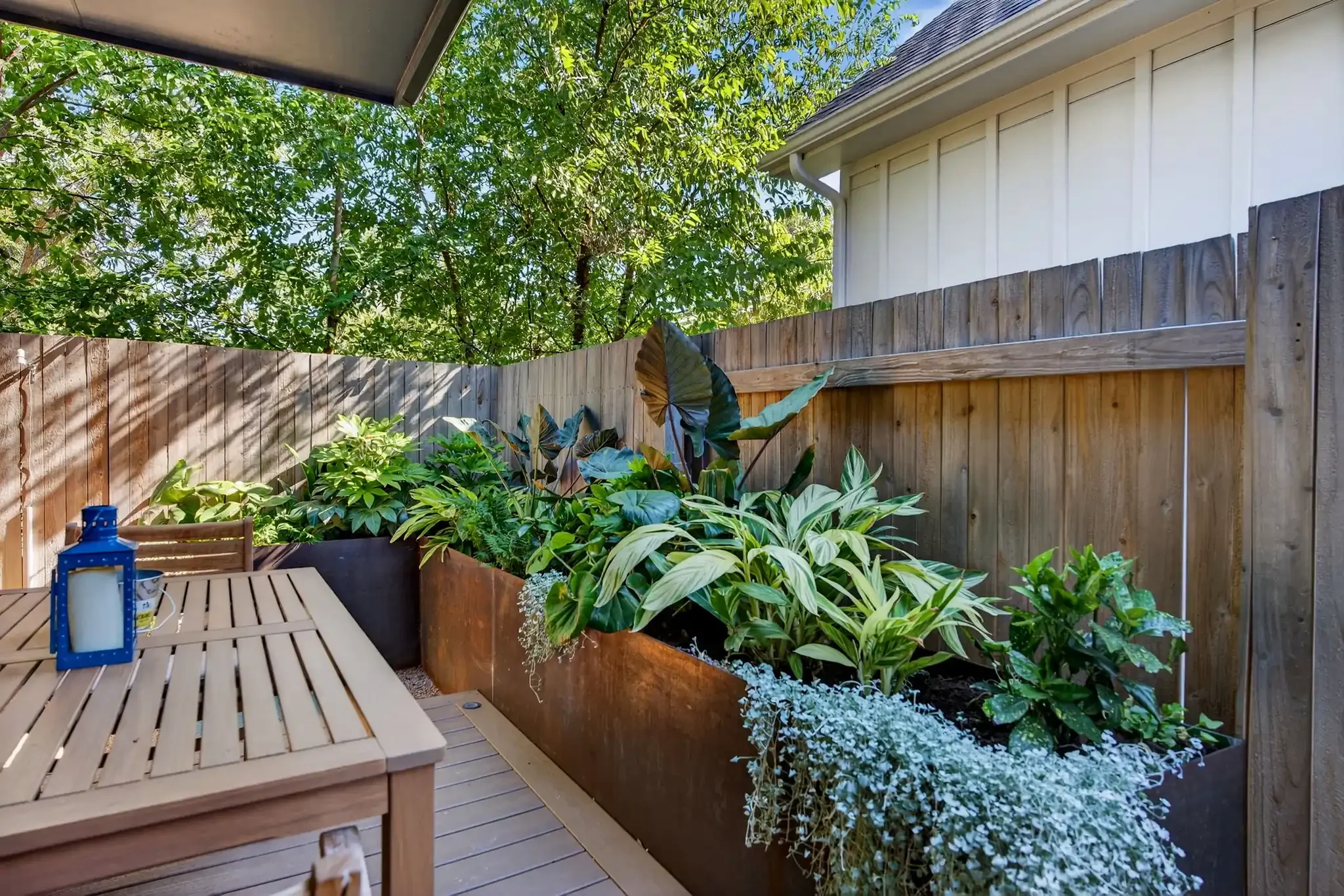
Fencing That Shapes Water, Wind, And Soil In Native Gardens
Permeable Fencing Patterns For Airflow And Plant Resilience
Airflow is a quiet force in plant health. Solid barriers can create gusty eddies that stress stems, while permeable fencing softens the wind. Slatted designs, woven wire, or hog panels with climbing natives threaded through them act like filters. They slow the air just enough to protect tall perennials without creating dead zones. Summer heat may fade, but in November breezes still tug on seed heads. A fence that tempers that motion helps plants stand through winter, feeding birds and holding structure.
Water behaves better with permeability, too. After a soaking rain, a solid wall can push runoff along its base, eroding mulch and exposing roots. A fence with openings lets rain pass through evenly, so soil stays in place and moisture spreads instead of channeling. That steadier moisture pattern supports deep-rooted natives built for feast-and-famine cycles. The fence becomes a tool for balance, making the planting less prone to puddles or scoured patches.
Strategic Layouts, Gate Placement, And Wildlife Corridors
Where the fence runs and where it breaks are design moves with outsized impact. A staggered layout that bends gently around a meadow bed lets people enjoy the view while guiding feet away from sensitive spots. Gates placed along the natural walking line feel intuitive, which reduces shortcuts through new seedlings. If the yard sits near a greenbelt or a creek, leaving a low corridor with open mesh at ground level lets small wildlife continue their routes while the overall boundary still reads as tidy and cared for.
Lighting and sightlines belong in the conversation, too. Low, warm fixtures on fence posts highlight the structure at night without blasting light into the habitat that insects rely on. In a corner where birds frequently feed, keep the fence line quieter and the gate farther away. Those small layout choices add up to a yard that welcomes visitors while giving the native plant community room to do what it does best. The fence directs the story, but the plants are the lead.
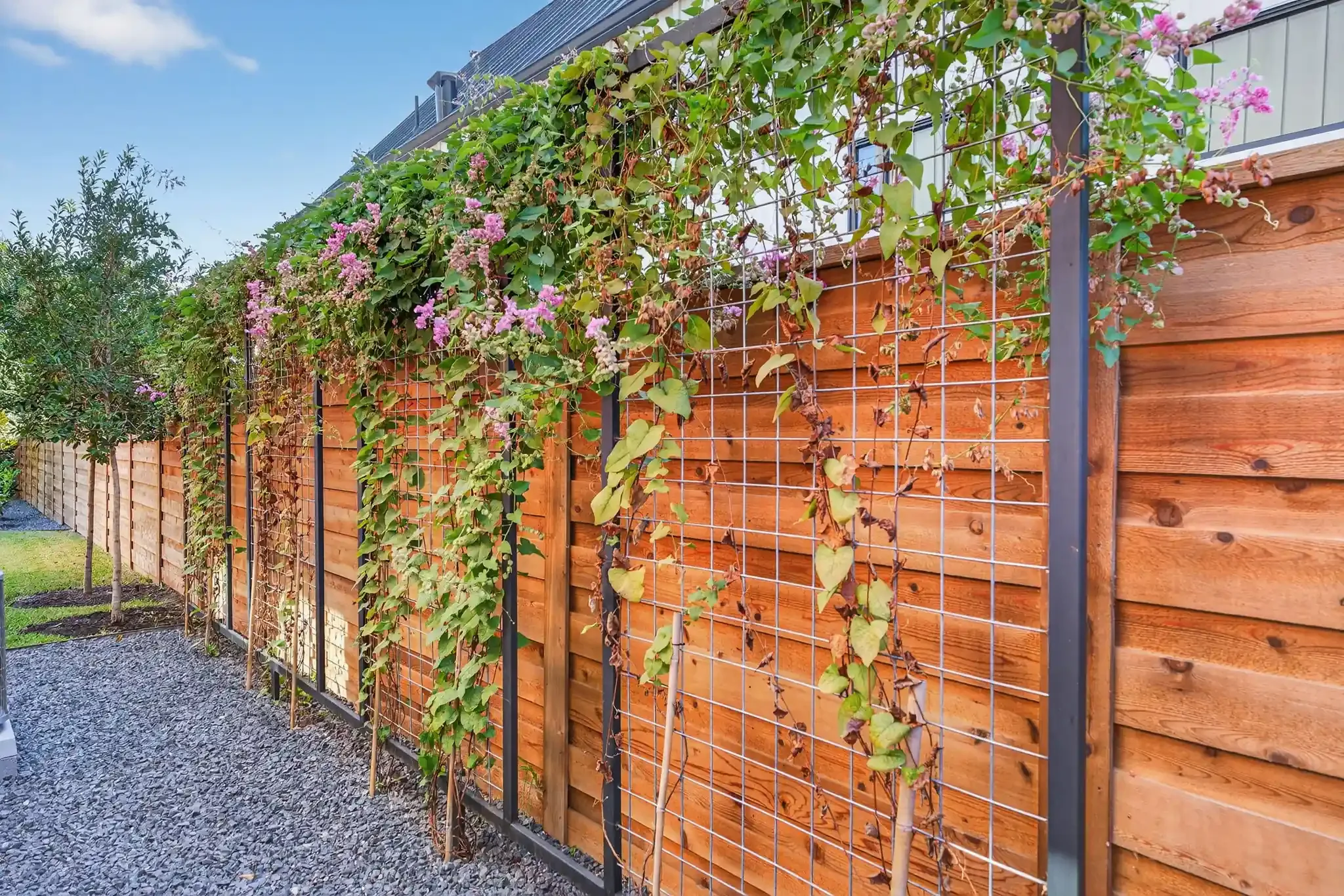
Fencing With Pavers To Support Paths And Native Plant Protection
Clean Edges Where Pavers Meet Planting Beds
Clear edges help people understand where to walk. When pavers meet a native bed, a slim fence just beyond the edge acts like a curb for feet and a guard for stems that lean into the path after rain. Set the fence line a palm’s width off the pavers so there is breathing space for mulch and self-sown seedlings. The path stays crisp, and the plants can still nod and sway without breaking. It is a simple trick that makes the whole garden feel more intentional.
Pavers and fencing also work together to manage microclimates. Sun-warmed pavers release heat in the evening, which can help late-season bloomers finish strong. A nearby open fence reduces wind stress, so those flowers do not snap during a blustery front. In wetter corners, a subtle grade on the pavers nudges water away from posts, while a gravel pocket at each base prevents splashback that could rot wood. The result is a tidy structure that lasts, with plants that look cared for rather than crowded.
Long-Term Care For Posts, Footings, And Living Borders
A fence installation that supports native landscaping should be as low-maintenance as the plants themselves. That starts below ground. Posts set with a collar of compacted gravel shed water, and a small rise in grade around each post keeps puddles from forming. If a section sits near pavers, a drip line along the planting edge should be placed so it does not constantly wet the posts. These details may seem small, but they determine whether a fence ages gracefully or needs patching after a few seasons.
Living borders do their part, too. Planting deep-rooted natives like little bluestem, sedges, or asters along the fence stabilizes soil and hides the lower rails without trapping moisture. As those plants knit together, they buffer the fence from mower bumps and foot traffic. When trimming, use a light touch near the base so stems continue to protect the soil. The fence provides space for the garden, and the garden returns the favor by protecting the fence. That reciprocity is the sweet spot of thoughtful landscape design.
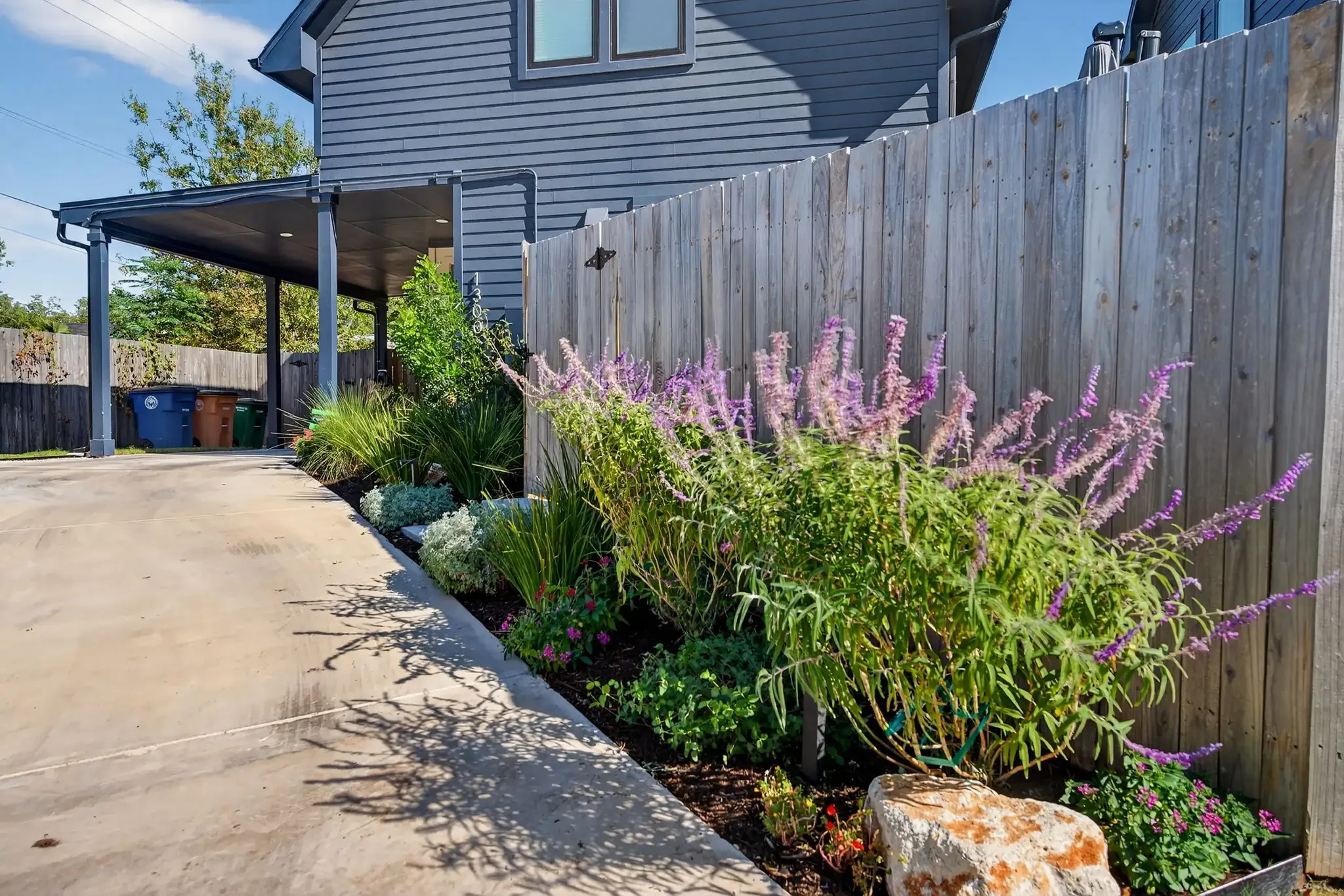
Conclusion
When a fence is designed with plants in mind, the whole yard settles into a more natural rhythm. Boundaries feel natural, wildlife can still move, and paths stay welcoming, with pavers that read clean rather than harsh. If you want a fence that truly serves your native landscape rather than fighting it, Southern Love Landscaping can help shape the details, choose the right materials, and map a layout that feels like it has always belonged. Reach out to contact us, and a friendly pro will walk the space, talk through options, and set a pace that works for your season.
We're now accepting new clients, call now to speak with a representative.